
What is grocery store equipment worth in liquidation?
A grocery store's equipment recovers far less in liquidation than it cost to install. The portable pieces (POS terminals, reach-in coolers, bakery ovens, slicers, gondola shelving) sell to a real used-equipment market. The built-in refrigeration (remote display cases, walk-in boxes, compressor racks and the piping between them) is worth most in place and least once it has to come out. A lender's recovery depends on which side of that line the collateral sits, and on whether the landlord lets anyone remove it.
Lukes & Lukes is an independent Machinery & Equipment (M&E) appraisal firm; every report is prepared by a NEBB-certified Machinery & Equipment Appraiser (CMEA).
By Jared Lukes · CEO & lead appraiser
Holding a grocery store as collateral? Request an appraisal →
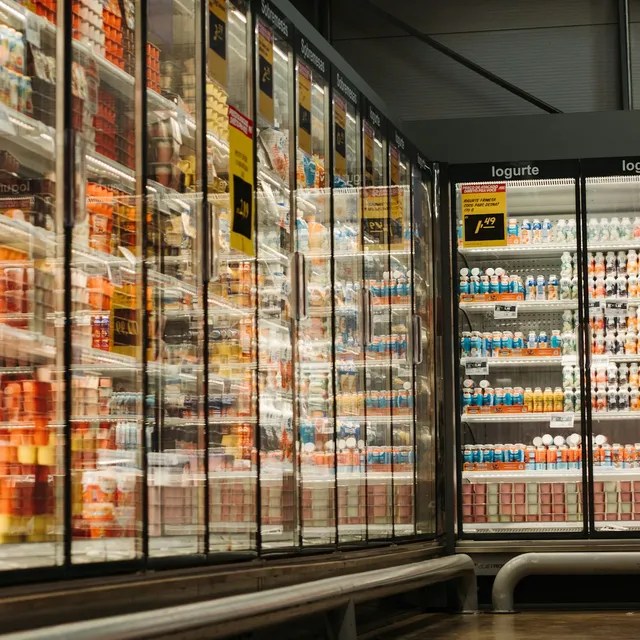
Grocery store equipment recovery at a glance
Recovery in a grocery liquidation follows two things: whether the asset can leave the building in one piece, and how many buyers want it used.
| Asset group | Installed or removable | What sets recovery | Relative recovery |
|---|---|---|---|
| Self-contained reach-ins, merchandisers, ice machines | Removable, plug-in | Brand, age, refrigerant, condition; broad restaurant and convenience buyer pool | Stronger |
| Bakery and deli equipment (ovens, proofers, mixers, slicers, fryers) | Mostly removable | Brand and age; food-service dealers and auction buyers compete for it | Stronger |
| Gondolas, shelving and warehouse racking | Removable, labor heavy | Knockdown and freight cost against a regional, price-driven market | Moderate to weak |
| POS terminals, scales, scanners | Removable | Technology generation and software licensing; short useful life | Weak |
| Remote display cases (multi-deck, frozen, service cases) | Built-in, piped to a rack | Disconnection, refrigerant recovery, crating and a buyer building or remodeling a store | Weak |
| Compressor racks, condensers, walk-in boxes | Built-in, often roof or mezzanine mounted | Rigging and crane cost, refrigerant type, fixture status under the lease | Weakest, sometimes below removal cost |
What is a grocery store's equipment worth in liquidation?
It depends on the premise and on the mix. A store with a large deli, bakery and prepared-food program carries more removable, marketable equipment than a store whose value sits in its refrigeration. Two stores with the same installed cost can produce very different liquidation values.
The refrigeration is usually the largest share of installed cost and the smallest share of recovery. A remote multi-deck case was built for a lineup, a rack and a piping run in one building. Out of that building it needs a buyer who is fitting out a store and willing to take used cases, and it arrives with the cost of disconnecting, crating and hauling it.
What makes recovery on grocery collateral low or high?
- Built-in versus removable. Plug-in equipment leaves on a pallet jack. Remote cases, walk-ins and racks need a refrigeration contractor, and the removal cost is charged against the sale.
- Refrigerant recovery. Federal rules require a technician to evacuate the refrigerant before a system is opened or disposed of (40 CFR 82.156). That work is a line in every orderly liquidation of a refrigerated store.
- Removal and rigging. Rooftop condensers and mezzanine racks need cranes, permits and roof patching. A walk-in box built from insulated panels comes apart, but the floor, the door frame and the refrigeration lines often stay behind.
- Landlord and fixture issues. Many grocery leases treat installed refrigeration and walk-ins as fixtures that stay with the building. A lender without a landlord waiver or access agreement may not be able to remove its collateral at all.
- Age and brand. Recognized case, compressor and food-service brands with parts support sell. Orphaned brands, older technology and equipment near the end of its useful life sell for scrap or not at all.
The 2027 refrigerant rule and used supermarket racks
EPA's Technology Transitions rule bars installing a supermarket refrigeration system that uses a refrigerant with a global warming potential of 1,400 or greater, effective January 1, 2027 (40 CFR 84.54(c)(12)). Assembling a system for the first time from used components counts as an installation under the same section (84.54(e)(1)).
A rack charged with a refrigerant above that limit has a smaller resale market once it leaves its building. The appraisal should name the refrigerant on each rack and state how it was treated.
FMV, OLV and FLV for a grocery store
- Fair Market Value in continued use: the equipment valued as part of an operating store. Refrigeration carries its installed contribution. Used for a going-concern sale, an SBA change of ownership, or a purchase price allocation.
- Orderly Liquidation Value (OLV): gross proceeds from a sale over a reasonable period, usually through a food-service dealer, a store-fixture broker or a managed auction. Removable equipment holds up; built-in refrigeration falls hard.
- Net Orderly Liquidation Value (NOLV): OLV less commissions, removal, refrigerant recovery, rigging and site restoration. On a refrigeration-heavy store the deductions are large. See what NOLV is and what comes out of it.
- Forced Liquidation Value (FLV): a compressed sale, often a single on-site auction on a lease deadline. Built-in refrigeration can bring little or nothing under this premise.
What should a lender ask for in a grocery store appraisal?
- A USPAP-compliant report, developed under STANDARD 7 and reported under STANDARD 8, by a credentialed M&E appraiser.
- The premise the credit decision needs, stated and defined, with OLV and NOLV side by side where the borrowing base runs on net.
- A line-item schedule that separates plug-in, built-in and fixture items, with make, model, serial and refrigerant type where the equipment shows it.
- The removal, refrigerant recovery and rigging deductions stated, not buried in a single discount.
- A clear statement of what was treated as real property and what as equipment, matched to the lease and any real estate appraisal.
- Leased equipment (often POS, scales and some refrigeration) identified and excluded from owned collateral.
Our lending collateral appraisals are built to that list.
Common questions
Answers, up front.
Our borrower's grocery store is closing. What will the equipment actually bring?
The removable equipment (bakery and deli equipment, plug-in coolers, scales, shelving) sells to food-service dealers and auction buyers. The remote cases, walk-ins and compressor racks bring far less than their installed cost, and removal, refrigerant recovery and rigging come out of what they do bring. An appraisal on an orderly or forced liquidation premise states both the gross and the net for each group.
Why did the store's refrigeration appraise so low when it cost so much to install?
Installed cost includes engineering, piping, electrical and labor that stay in the building. Once removed, a remote case or rack sells only to a buyer fitting out another store, after the seller pays a refrigeration contractor to take it out. The liquidation value reflects that buyer and that cost.
The landlord says the walk-ins and display cases stay with the building. Can the bank still recover them?
It depends on the lease, the security agreement and any landlord waiver in the loan file. Items the lease treats as fixtures may not be removable. The appraisal identifies which items are equipment and which are fixtures, and values each on the premise the lender specifies. Counsel decides the legal question.
The compressor racks run an older HFC refrigerant. Does the 2027 EPA rule lower their liquidation value?
It can. Under 40 CFR 84.54, a supermarket system using a refrigerant with a global warming potential of 1,400 or greater cannot be installed from January 1, 2027, and assembling a system from used components counts as an installation. The appraisal names the refrigerant on each rack and reflects the narrower resale market.
The store is still trading. Can the equipment be inspected without disrupting it?
Yes. Sales-floor refrigeration, back-room walk-ins and rooftop condensers can be inspected around store hours. Serial plates and refrigerant labels are read on site, and the schedule is set with the store before the visit.