
Equipment appraisals for lending and collateral.
A lending appraisal from Lukes & Lukes is an independent, USPAP-compliant opinion of value for the equipment behind a loan: OLV, NOLV and FMV for equipment loans and asset-based lending. Lenders order it to set advance rates and document the credit. Borrowers order it when the bank asks for an independent value before closing.
At a glance
- What it is
- An independent, USPAP-compliant opinion of value for the equipment behind a loan, for equipment loans and asset-based lending.
- Values reported
- OLV, NOLV and FMV, side by side in one report when the credit memo calls for more than one. Most advance rates are set against NOLV.
- Who orders it
- Commercial lenders and credit officers, ABL groups, loan-review and workout teams, and borrowers when the bank asks for an independent value before closing.
- When it is ordered
- Origination, renewal and annual review, workout and restructure, and an examiner request.
- What the report gives you
- A narrative of scope and methodology, an itemized appendix valuing each asset, and inspection photographs, with senior review. Advance rates can be applied at the category level.
- What we need
- The asset list with make, model, year and serial numbers, meter readings, photographs and maintenance records. Borrower financial statements are not required.
Which value applies
Fair market value vs orderly liquidation value: which does the lender use?
The lender chooses the premise from what the credit decision rests on: Orderly Liquidation Value for collateral coverage, Net Orderly Liquidation Value for most advance rates, and Fair Market Value where the loan references market value. Orderly Liquidation Value (OLV) is what the equipment brings in a private, advertised sale over a reasonable selling period.
Net Orderly Liquidation Value (NOLV) is that figure after the costs of sale come out. Fair Market Value (FMV) is the price a willing buyer and seller would reach with no compulsion to act. On the same equipment FMV is normally the highest of the three and NOLV the lowest.
We develop and support each premise under USPAP and state the assumptions in the report. The full premise glossary lives on our process page.
- Orderly Liquidation Value (OLV): the value realized in a private sale over a reasonable selling period, the common basis for collateral coverage
- Net Orderly Liquidation Value (NOLV): OLV after the costs of sale, removal and disposition, the value asset-based lenders set advance rates against
- Fair Market Value (FMV): the price a willing buyer and seller reach with no compulsion to act, used where the loan references market value
- One premise or several: a single report can carry OLV, NOLV and FMV side by side when the credit memo calls for more than one view
- Stated and supported: every value ties to a defined premise, a dated effective opinion, and the approaches that produced it
When the file calls for it
When does a lender need a collateral equipment appraisal?
A lender needs a collateral equipment appraisal at four points in the life of a credit: origination, renewal or annual review, workout or restructure, and an examiner request.
- Origination: The borrower applies for an equipment loan or a line secured by machinery. The credit officer needs an independent value to size the advance, set the collateral margin and document the file before the first draw.
- Renewal and annual review: The credit comes up for renewal or the examiner flags the file. A current appraisal confirms that the collateral still covers the outstanding balance and that the original advance rate still holds.
- Workout and restructure: The borrower is in distress or the credit has migrated to special assets. The workout team needs a liquidation value (OLV or FLV) that reflects what the equipment would actually bring, not what it was worth at origination.
- Examiner request: A bank examiner or internal audit questions the collateral support on a reviewed credit. A fresh, USPAP-compliant appraisal answers the question with documented methodology, not a management estimate.
Asset-based lending
How does NOLV set an ABL borrowing base?
In an asset-based lending (ABL) facility, the borrower draws against a borrowing base that includes equipment alongside receivables and inventory. The equipment component is almost always built on Net Orderly Liquidation Value: the amount the collateral would return after the costs of sale, removal and disposition.
The ABL group applies an advance rate to that NOLV to arrive at the equipment borrowing capacity.
We prepare the appraisal with the borrowing base in mind. Every asset is itemized. The NOLV for each is documented so the lender can apply advance rates at the category level, not just as a single lump sum. When the borrowing base is recertified, the file is ready.
For the deductions behind NOLV and why it differs from gross OLV, see our full explainer on Net Orderly Liquidation Value.
What we cover
What equipment can be appraised as loan collateral?
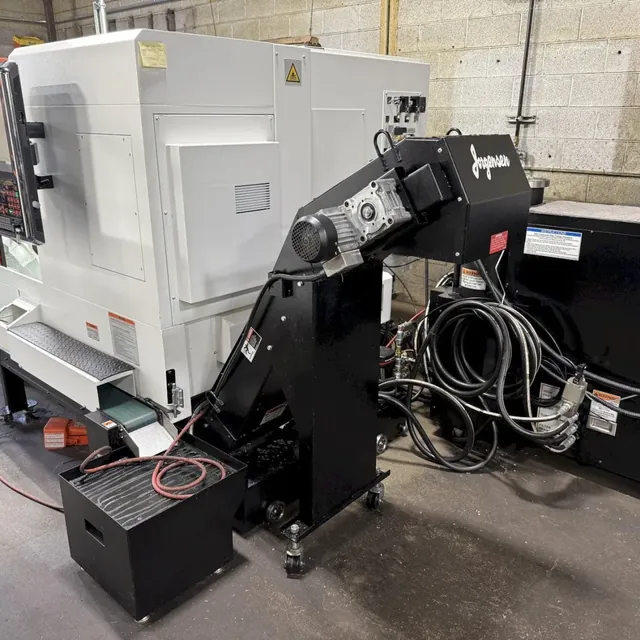
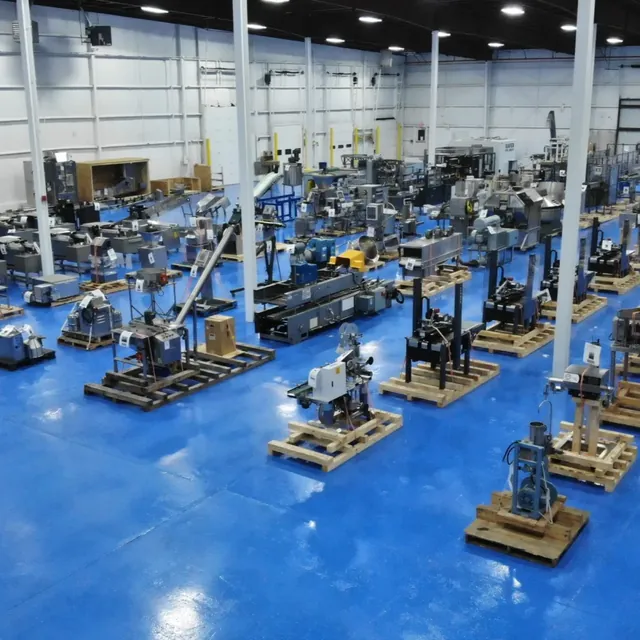
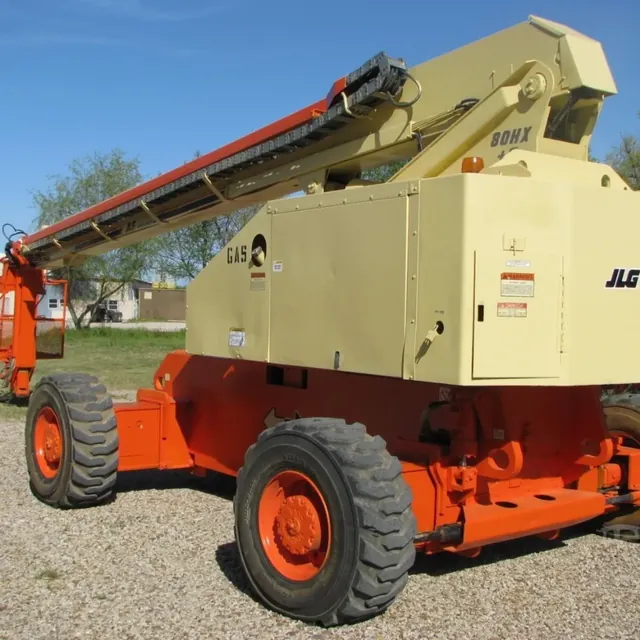
Any business equipment can be appraised as loan collateral. Each file carries market evidence from the buyer pool for that class of equipment, not a generic depreciation table.
In healthcare, that includes imaging, surgical, patient monitoring, sterile processing, dialysis and ophthalmology equipment. In automotive, it includes lifts and alignment, ADAS calibration, tire and wheel service and collision repair equipment.
Related work
Where a collateral file leads next.
A collateral appraisal rarely stands alone. An SBA deal needs the same equipment valued to the SOP. A workout needs the downside value. Specialized assets call for specialty market data. These pages cover each.
Who orders it
Who orders a collateral equipment appraisal?
Commercial lenders and credit officers order a collateral appraisal to underwrite an equipment loan. Asset-based lending (ABL) groups order one to set advance rates against a borrowing base.
Loan-review and workout teams order one to re-measure exposure on a watch-list credit. Bank examiners read the same file to test whether the value was supported. And borrowers order one when the bank asks for an independent value before closing.
What you get
What does a collateral appraisal report include?
A collateral appraisal report includes a written narrative of scope and methodology, an itemized appendix valuing each asset, and photographs from inspection. Independent and certified, with senior review before it leaves. A renewal appraisal is built on the same method as the original. A reviewer reads the change in the collateral, not a change in approach.
- Cost, market and income approaches applied by a certified appraiser, not a database
- OLV, NOLV and FMV carried in one file when the credit memo calls for it
- Independent senior review on every report
- Lender-fluent: we write for the credit desk, so our report reads the way a lender needs it to
Examiner-ready
What do bank examiners look for in a collateral appraisal?
Bank examiners, internal auditors and loan-review officers look for four things in a collateral appraisal: the premise, the methodology, the market evidence and the independence of the appraiser. If any of those is missing or vague, the file is a finding.
We write for that reader. Every report names its premise, states its assumptions, documents the three approaches to value and ties each conclusion to dated market evidence. The appraiser is independent of the deal, certified (CMEA, NEBB) and operating under USPAP. When the examiner opens the file, the support is already there.
- Premise stated on the page: OLV, NOLV, FMV or a combination, named and defined so the reader knows which question the value answers
- Three approaches documented: cost, sales comparison and income, with the reconciliation explained
- Market evidence cited: comparable sales, dealer offerings and auction results, dated and sourced
- Independence clear: no interest in the transaction, no contingent fee, USPAP Ethics Rule observed
- Itemized appendix: every asset listed with make, model, year, condition and individual value so the lender can slice collateral by category
Collateral-first credits
Collateral-first appraisal without borrower financials
A collateral-first equipment appraisal values the machinery without the borrower's financial statements. The subject is the equipment, not the business. Under USPAP, machinery and equipment is personal property, developed under STANDARD 7 and reported under STANDARD 8, and the value comes from the asset and the market that buys assets like it: make, model, year, hours or cycles, configuration, condition and location.
It is the usual assignment on distressed credits: workouts, special assets files, a borrower that will not or cannot produce current statements, and a file inherited mid-problem. The collateral question stays answerable when the credit question is not.
Financial statements answer a different question, the value of the business, which is a separate discipline under separate standards. They do not select the premise either. Continued use, or removal and sale, follows the assumed conditions of sale, not the borrower's earnings.
The lender receives OLV, NOLV or FMV for each unit on the premise it names, an appendix reconciled against what is on site with missing, leased and unlisted assets flagged, inspection photographs of nameplates and condition, and a stated effective date and inspection date. Anything we could not verify, such as hours on a unit with a dead meter, is named as an assumption in the report.
- What the appraiser needs instead: an asset list or fixed asset register with make, model, year and serial numbers
- Meter readings: hours, miles or cycles where the asset class records them
- Photographs: nameplates, overall condition, and anything visibly damaged, modified or missing
- Maintenance and overhaul records where they exist
- Site access when the assignment is on-site, or good documentation when it is not
- Not required: tax returns, statements, receivables ageing or the borrower's projections
Independence
What happens when the value comes in under the loan request?
The value does not move. The structure does.
A lender with a shortfall has real options, and all of them sit on the lender's side of the table. Reduce the advance to what the collateral supports. Take additional equipment or other assets into the package. Restructure the facility or the term. Ask for a guarantee. Decline the credit.
What does not happen is the appraiser revising a conclusion so the credit works. The Ethics Rule in USPAP is explicit: an appraiser must not accept an assignment that includes the reporting of predetermined opinions and conclusions, and compensation cannot be contingent on the reporting of a predetermined result.
New information is a different matter, and it is common. If equipment was left off the list, if we were not shown an asset, if a documented rebuild or overhaul surfaces, or if the purpose of the assignment genuinely changes and calls for a different premise, that is a revised or new assignment with its own scope of work and its own effective date. It is not an edit to the old one, and the report says so on its face.

Video · 1:06 · with transcript
Ordering an Equipment Appraisal for a Loan: 3 Things to Check
The three things credit officers and lenders should verify on any machinery and equipment collateral appraisal: the premise of value matches the loan, the equipment was inspected and serial numbers verified on site, and the appraiser is independent of the deal.
Common questions
Answers, up front.
Do I need an appraisal for an equipment loan?
In most cases, yes. When equipment secures a loan, the lender needs an independent opinion of value to set the advance rate and document the credit. A self-reported figure or a dealer invoice does not establish current collateral value. A USPAP-compliant appraisal gives the credit file a supported value that examiners and reviewers will accept.
Which value do lenders set advance rates against?
Net Orderly Liquidation Value, in most equipment and asset-based facilities. The advance rate is applied to the net figure rather than the gross, because the credit has to survive the cost of selling the collateral, not just the sale itself. We itemize the assets so the rate can be applied at the category level and the borrowing base recertified without a fresh engagement. For how the net figure is built, see our explainer on Net Orderly Liquidation Value.
Will my bank accept this appraisal?
Yes. Reports are USPAP-compliant, prepared by a NEBB-certified Machinery & Equipment Appraiser (CMEA), and built to withstand lender, SBA, IRS, audit and legal review. The scope, premise and approaches are stated in full, so a credit officer or examiner can trace how the value was reached.
What drives collateral value?
Age, condition, maker and model, installed configuration, and the depth of the resale market for that class of equipment. We inspect the assets, document them with photographs, and apply the cost, market and income approaches to support the value. We do not quote a value before inspection.
Can one report cover OLV, NOLV and FMV together?
Yes. When a credit memo references more than one premise, we carry OLV, NOLV and Fair Market Value (FMV) side by side in a single file, each tied to a defined premise and a dated effective opinion. That gives the lender one consistent set of assumptions to underwrite against.
What is asset-based lending and how does the appraisal fit?
Asset-based lending (ABL) is a credit facility where the borrower draws against a borrowing base made up of receivables, inventory and equipment. The equipment portion of the base is typically built on Net Orderly Liquidation Value (NOLV). We itemize and value the assets so the ABL group can apply its advance rates at the category level and recertify the base without starting over.
How often should lending collateral be reappraised?
There is no universal rule, but most credit policies call for a reappraisal at renewal, when the credit is materially modified, when the borrower's condition changes, or when an examiner flags the file. Asset-based facilities often reappraise annually. We can update a prior report or prepare a new one depending on how much has changed in the equipment and the market.
Can you appraise equipment in multiple locations for one loan?
Yes. Many commercial credits and ABL facilities involve equipment spread across several sites. We coordinate inspection across locations, document each site separately in the appendix, and deliver one consolidated report so the credit file stays clean. Nationwide coverage means there is no subcontracting or handoff on remote sites.
Do you need the borrower's financial statements?
No. An equipment appraisal values the equipment, not the business, so the inputs are the asset list, serial and model numbers, meter readings, condition and photographs. Statements, tax returns and projections are not part of developing an opinion of value on machinery. A collateral appraisal can be completed on a distressed or uncooperative credit that has stopped producing statements.
Will you revise the value if the credit does not work at that value?
No. USPAP prohibits accepting an assignment that includes reporting a predetermined opinion or conclusion, and prohibits compensation contingent on a predetermined result. New information is different and is handled properly: equipment left off the list, an asset we were not shown, a documented overhaul, or a genuine change in the purpose of the assignment. Each of those is a revised or new assignment with its own scope and effective date, stated on the face of the report.
What if the borrower's asset list is out of date?
Common, and it is one of the things an inspection is for. Registers drift: assets get sold, scrapped, moved between sites, or replaced without the list catching up, and leased equipment often sits on it as though it were owned. We reconcile what is on the list against what is actually there, flag the differences, and value what the lender can reach. A borrowing base built on a stale register overstates collateral, which is the finding nobody wants in a review.
What is the difference between an appraisal and a desktop estimate?
An appraisal is a USPAP-compliant opinion of value developed from inspection, documented methodology and market evidence, prepared by a certified appraiser. A desktop estimate is faster and cheaper but relies on descriptions and assumptions rather than verified condition and configuration. Most credit policies require the full appraisal for the initial file, though a limited-scope update may be acceptable at renewal depending on the bank's policy.
The appraisal came in under the loan request. What are our options?
The value does not move. The structure does. A lender with a shortfall can reduce the advance to what the collateral supports, take additional assets into the package, restructure the facility or the term, ask for a guarantee, or decline the credit. What does not happen is the appraiser revising a conclusion so the credit works: USPAP prohibits accepting an assignment that reports a predetermined opinion. New information is a different matter. Equipment left off the list, an asset we were not shown, or a documented rebuild that surfaces later is a new or revised assignment with its own scope and effective date, and the report says so on its face.