
Warehouse automation and material handling appraisals.
A warehouse automation appraisal from Lukes & Lukes values the systems that move and store goods: AGVs and AMRs with their fleet software, AS/RS and vertical lift modules, conveyors and sortation, forklift fleets, pallet racking, dock equipment and the battery fleet behind them. Each report is USPAP-compliant and states whether the value is installed and in use or removed, for lenders, buyers, insurers and counsel.
At a glance
- What we appraise
- AGVs, AMRs and autonomous forklifts, fleet management software, AS/RS, VLMs and carousels, conveyors and sortation, IC and electric forklift fleets, pallet racking, dock equipment, batteries and chargers.
- Installed or removed
- Installed value includes integration, commissioning and transferable software. Removed value deducts decommissioning, freight and the cost to make the hardware a working system again.
- Values reported
- FMV, FMV in continued use, OLV and FLV, with the premise defined before the work starts.
- Who relies on it
- Lenders and asset-based lenders, buyers and sellers of a distribution business, sale-leaseback investors, lessors, insurers and attorneys.
- Ownership checked
- Leased trucks and robots-as-a-service fleets are reconciled against the asset list before any unit is valued as owned.
- Standard
- USPAP-compliant, prepared by a NEBB-certified Machinery & Equipment Appraiser (CMEA), with senior review.
What we appraise
Every system on the distribution floor.
We appraise a warehouse as equipment and as a working system: the mobile fleet, the storage structure, the automation that ties them together and the power that runs them. For a forklift and racking schedule on its own, see our material handling equipment appraisals.
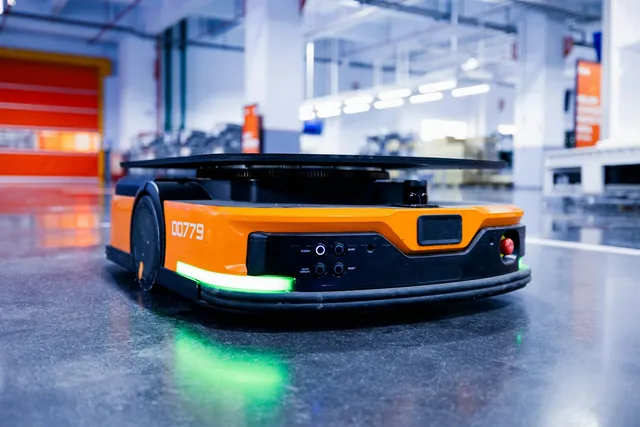
- AGVs, AMRs and autonomous forklifts. Laser-guided and natural-feature AGVs, tuggers and carts, collaborative picking robots and automated forklifts, with the fleet manager, maps, licenses and charging docks that run them.
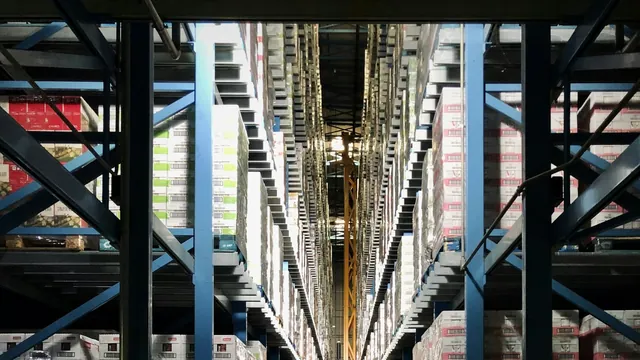
- AS/RS, VLMs and cube storage. Unit-load stacker cranes, mini-load and shuttle systems, vertical lift modules, carousels and robotic grid storage.
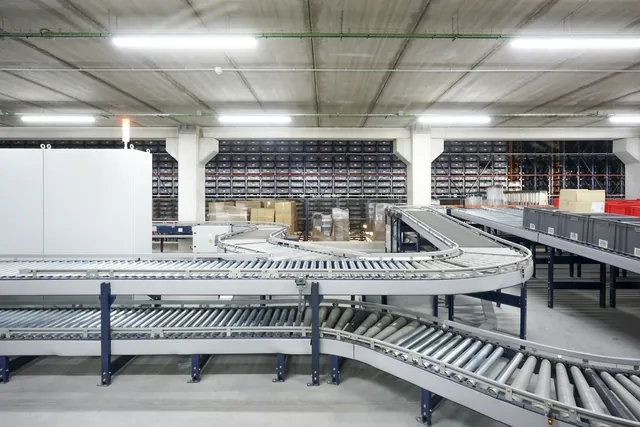
- Conveyors and sortation. Gravity, belt, live roller and MDR conveyor, accumulation, sorters, and the PLCs, drives and warehouse control software behind them.
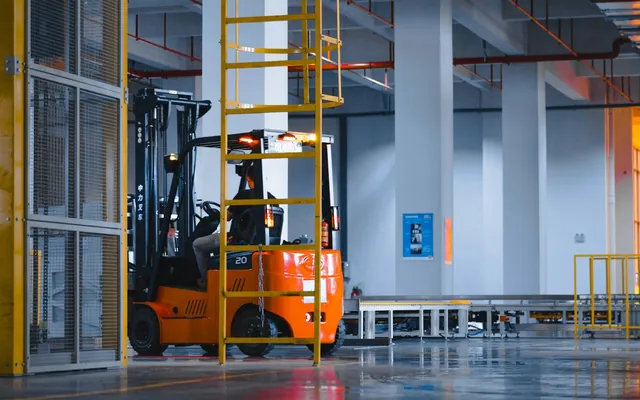
- Forklift fleets. IC cushion and pneumatic trucks, electric counterbalance, reach trucks, order pickers, turret and very narrow aisle trucks, pallet trucks and stackers, sideloaders and truck-mounted forklifts.
- Pallet racking and shelving. Selective, drive-in, push-back, pallet flow and cantilever rack, carton flow and mezzanines, counted by frame, beam pair and deck.
- Dock equipment. Levelers, vehicle restraints, seals and shelters, and dock doors, each assigned to equipment or building in the report.
- Batteries, chargers and fuel cells. Lead-acid and lithium-ion packs, chargers counted by voltage, battery room equipment and hydrogen fuel cell power units.
How these systems are valued
Installed, integrated and supported, or not.
An automated warehouse holds its value in use at the site. Off the site, the same hardware is parts, scrap and removal cost. The report measures where each asset sits between the two.
- Integration and software. Engineering, integration and commissioning are a large share of what an automated system cost new. They count in an installed premise and drop out of a removed one.
- Installed versus removed. In place, the value includes installation and integration. In exchange, it deducts decommissioning, crating, freight and the integrator work a buyer pays to re-commission the system elsewhere.
- Per unit or as a system. A forklift or a VLM is valued as a unit that sells on its own. A sorter, a crane AS/RS or a robotic grid is valued as a system. Its parts have little use apart.
- Fleet controllers and licenses. Fleet manager, per-robot and WMS interface licenses are often tied to the site and the customer. A license that does not transfer carries no value to a third-party buyer.
- Battery condition. On an electric truck the battery is a second asset with its own life. We record maker, date code, voltage and amp-hours, read lithium state of health from the BMS, and count chargers against trucks by voltage.
- OEM support and obsolescence. Vendor status is checked and dated at inspection. A failed or exited automation vendor leaves hardware without firmware, parts or cloud services, and legacy PLCs and drives turn a sound conveyor into a controls replacement.
- Relocation cost. Rack teardown, licensed electrical disconnect, freight, re-engineering for a new building and short removal windows at a closure all come off the value in exchange.
- Ownership. Robots-as-a-service fleets belong to the vendor, and dealer-leased trucks belong to the lessor. Each serial is reconciled to ownership documents before it is valued.
Which value applies
The premise depends on the purpose.
Fair Market Value (FMV) fits a sale, a purchase price allocation and tax. Fair Market Value in Continued Use fits a going concern that keeps the system running in its current building, with installation and integration included. Orderly Liquidation Value (OLV) and Forced Liquidation Value (FLV) fit lending, workouts and closures, net of removal. The gap between the installed and the liquidation values is wider for automation than for almost any other equipment class. The premise is settled in writing before inspection.
Who orders it
Lenders, buyers, lessors, insurers and counsel.
Banks and asset-based lenders order a warehouse automation appraisal to size collateral and set advance rates. Buyers and sellers of a distribution or fulfillment business order one for diligence and price allocation. Sale-leaseback investors and lessors order one to set the purchase price and the residual, and again at lease return. Insurers and brokers order replacement cost for the schedule. Attorneys order one for a dispute over a failed installation, a loss or a contract.
What you get
A report built to be challenged.
- A narrative report. Scope, the premise, the approaches applied and the conclusion, with the installed and removed values separated where both apply.
- An itemized appendix. Each truck, battery, charger, robot, conveyor run, rack bay and dock position with its serial where one exists and its supporting value.
- Ownership and fixture schedules. Leased and subscribed units listed apart from owned ones, and fixture questions such as pit levelers and rack-supported structures flagged for the lender and the real property appraiser.
- Independent senior review. Every report passes a second review before it leaves, and it is written for the credit desk.
Common questions
Warehouse automation appraisal questions, answered.
Our AMR fleet runs on a robots-as-a-service contract. Can it go in a collateral appraisal?
Not as the borrower's asset. Robots on a subscription or RaaS contract belong to the vendor. We read the contract, list the subscribed units separately, and value only the hardware, chargers and spare parts the operator owns.
The vendor behind our automation system has gone out of business. What is the system worth now?
It is valued as it stands on the inspection date, with the vendor's status recorded and dated. In continued use, the value turns on whether the system still runs and can be maintained without the vendor. Removed, a system with no support path trades as parts.
Should our electric forklifts be appraised with or without their batteries?
With the battery as its own line. The appraisal records each battery's maker, date code, voltage, amp-hours and condition, reads lithium state of health from the BMS, and counts chargers against trucks by voltage. A truck without a battery is a different asset and is valued as one.
We are selling the business and the conveyor and sortation system stays in the building. How is it valued?
As installed and in use, at Fair Market Value in Continued Use, including installation, integration and the control software that transfers with it. Licenses that stay with the seller or the integrator are excluded and named in the report.
Our pallet racking has no load plaques or engineering drawings. Does that affect its value?
Yes. Without load plaques or rack configuration drawings a buyer cannot prove capacity, and a permit office may ask for both before the rack goes back up. The report notes the missing documents and values the rack on what a buyer will pay for it as it stands.