
Warehouse equipment appraisal: valuing the whole operation
A warehouse appraisal covers more than forklifts and racking. Dock equipment, automated storage and retrieval systems, cold storage infrastructure, packaging and shipping lines, and battery charging stations all carry value, and each depreciates on a different curve. The forklifts and racking have an active resale market; an integrated AS/RS or a refrigeration system is worth far more installed than removed. The appraisal has to price each system on its own market and state the premise clearly. Lukes & Lukes is an independent Machinery & Equipment (M&E) appraisal firm; every report is prepared by a NEBB-certified Machinery & Equipment Appraiser (CMEA).
By Jared Lukes · CEO & lead appraiser · September 11, 2026
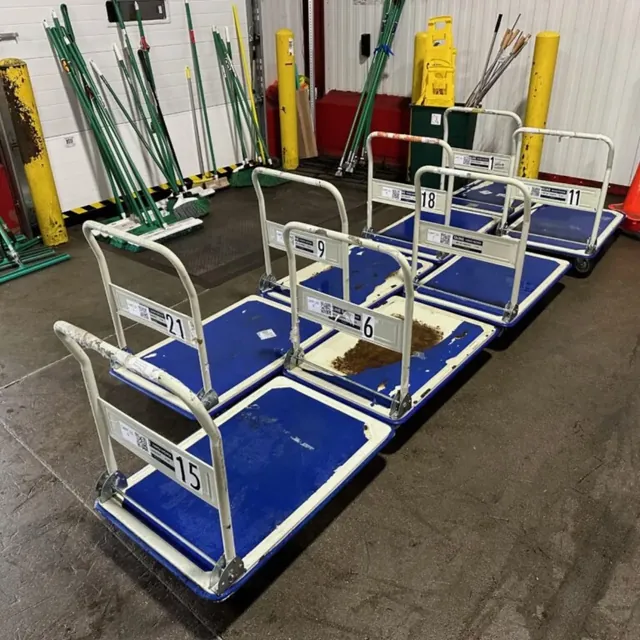
What a warehouse equipment appraisal covers
A warehouse is a system, not a room full of parts. The equipment inside it falls into distinct categories, each with its own market, its own installation cost, and its own sensitivity to removal.
- Dock equipment: dock levelers, bumpers, seals, overhead doors, truck restraints. These are semi-permanent fixtures and their value depends on condition, load rating and how deeply they are integrated into the building.
- Automated storage and retrieval: AS/RS systems, vertical lift modules (VLMs), horizontal and vertical carousels, goods-to-person systems. Highly productive in place, difficult and expensive to relocate, and valued very differently under fair market value than under a liquidation premise.
- Packaging and shipping: stretch wrappers, case sealers, label applicators, print-and-apply systems, in-line scales and dimensioners. These range from portable benchtop units to integrated line systems, and the value follows that range.
- Cold storage and climate control: walk-in coolers and freezers, blast freezers, refrigeration compressors, insulated panel systems, HVAC for temperature-sensitive inventory. Installed cost is high; removal and reinstallation cost limits what the equipment brings on the secondary market.
- Charging infrastructure: forklift battery charging stations, opportunity and fast chargers, battery rooms, and increasingly EV charging for yard tractors and delivery vehicles.
- Conveyors and sortation: belt, roller and powered conveyors, crossbelt and tilt-tray sorters, merge and divert systems. Covered in depth in material handling equipment valuation.
Why a warehouse is not just material handling
A material handling appraisal covers forklifts, racking and conveyors as equipment classes. A warehouse appraisal covers the facility as an operating system. The distinction matters because a warehouse contains equipment that does not travel well. An AS/RS was designed for the building it sits in, engineered to that ceiling height, that floor load, and that throughput plan. A refrigeration system was sized for the cubic footage it cools. Dock equipment was installed into the walls. When those assets are valued for a going concern or a facility sale, the in-place cost and the in-place utility are the relevant references. When they are valued for a lender who needs to know what they bring if the borrower defaults, the removal cost, the transport logistics and the much smaller buyer pool are the relevant references. The premise makes the difference, and a warehouse appraisal has to get that right for every system, not just the mobile equipment on the floor.
What drives value in a warehouse
Four factors separate a warehouse with strong equipment value from one with weak equipment value.
- Automation level. A highly automated distribution center with an AS/RS, sortation and conveyance has a large installed asset base. That base is productive in place but harder to liquidate than a conventional warehouse full of forklifts and pallet racking. Both can be strong collateral; the premise of value determines which story the numbers tell.
- Cold chain infrastructure. Refrigeration and climate control add significant cost and significant value, but they are building-integrated. The appraiser has to draw the line between what is equipment (the compressor, the evaporator, the controls) and what is real property (the insulated panels, the slab, the vapor barrier). That boundary affects the total on both the M&E appraisal and the real estate appraisal, and the two need to agree.
- Age and technology generation. Newer warehouse automation (shuttle systems, AMRs, goods-to-person) holds value better than older carousel or mini-load systems, partly because the secondary market is more active and partly because integration with current WMS platforms is easier. Dock equipment and racking are durable and depreciate slowly. Packaging line components vary: a tabletop stretch wrapper is commodity equipment, a high-speed in-line wrapper is specialized.
- Installation and removal cost. The gap between installed value and removed value is wider in a warehouse than in most industrial settings, because so much of the equipment was engineered for the specific building. A VLM can be relocated, but it requires millwork, rigging, and recalibration. A conveyor loop that runs through walls and mezzanines costs more to remove than the conveyor itself is worth on the secondary market. The appraisal documents that gap for each system.
How we build a warehouse equipment appraisal
The method is the same whether the warehouse is being sold, financed, insured or divided.
- Inventory the facility system by system. Dock equipment, storage systems, conveyance, packaging, refrigeration, charging, and everything else on the floor. Make, model, serial, year, capacity and condition per unit. Separate owned equipment from leased, and equipment from building fixtures.
- Draw the M&E / real property boundary. In a warehouse the line between equipment and the building is not obvious. Insulated panels, embedded floor anchors, and overhead crane rails can be on either side depending on how they were installed and what they serve. We draw it explicitly and document it so the equipment appraisal and any real estate appraisal covering the same facility do not double-count or leave a gap.
- Choose the premise. A facility sale calls for fair market value in place. A lending file usually calls for orderly liquidation value or net orderly liquidation value. An insurance claim calls for replacement cost new. The premise changes the number on every system in the building, but it changes it by different amounts, which is why a blanket discount does not work.
- Gather evidence per category. Forklifts have a deep auction and dealer market. Racking trades regionally, priced by the pallet position. Conveyors and automation sell through specialized brokers and OEM refurbishment programs. Cold storage equipment is a smaller, slower market. Each category gets its own comparables.
- Reconcile the whole operation. A warehouse is not the sum of its parts when the parts have to be removed. Absorption, transport, de-installation cost and the time it takes to find a buyer for a building-specific AS/RS all pull the fleet total below the sum of the individual estimates. The reconciliation and the reasoning behind it are what credit review and an examiner read.
What a warehouse appraisal costs
There is no flat price. Fee is driven by scope: how large the facility is, how many systems and how much automation it contains, whether the assignment is a single warehouse or a multi-site distribution network, what premise the purpose requires, how complete the client's asset records are, and whether the report is going to a lender, a buyer, or a courtroom. A straightforward warehouse with forklifts, racking and dock equipment is a simpler engagement than a high-automation DC with an AS/RS, sortation, refrigeration and packaging. Tell us the purpose and the facility and we scope it precisely.
Common questions
Answers, up front.
What is the difference between a warehouse appraisal and a material handling appraisal?
A material handling appraisal covers forklifts, racking and conveyors as equipment classes. A warehouse appraisal covers the facility as an operating system: dock equipment, automation, cold storage, packaging and charging infrastructure alongside the mobile equipment. The warehouse scope is broader and includes systems that are integrated into the building.
Is dock equipment part of the building or part of the equipment?
It depends on the installation. Dock levelers, bumpers and restraints are often embedded in the building structure, which puts them on the real property side. Portable dock plates and standalone bumpers are equipment. We draw that line explicitly in the report so the equipment and real estate appraisals do not double-count or miss anything.
How do you value an AS/RS or automated warehouse system?
Installed, an AS/RS is valued on its throughput, condition, remaining support and integration with the building. Removed, the value drops substantially because relocation is expensive and the system was designed for a specific building. The premise of value, whether fair market value in place or orderly liquidation, determines which frame applies, and the gap between the two is typically larger than for any other warehouse system.
Do you appraise cold storage and refrigerated warehouse equipment?
Yes. We appraise walk-in coolers and freezers, blast freezers, refrigeration compressors, evaporators, controls and insulated panel systems. The M&E / real property boundary is drawn carefully, because some components (compressors, evaporators) are equipment and others (panels, slabs) are building.
Can a warehouse appraisal support an SBA loan?
Yes. SBA lenders require an independent, USPAP-compliant appraisal by a qualified appraiser when the equipment collateral exceeds their threshold. Our reports are built to that standard: NEBB-certified CMEA, USPAP-compliant, with senior review before delivery.