
What is a contractor's equipment fleet worth?
A contractor's equipment fleet is valued unit by unit at the serial-number level, then reconciled as a fleet, because a group of machines sold together does not behave like the sum of machines sold one at a time. Hours, condition, attachments and the mix of yellow iron against titled rolling stock drive the units; location, transport and how many similar machines hit the market at once drive the fleet. What the equipment is worth is not what the company is worth.
Lukes & Lukes is an independent appraisal firm; a NEBB-certified Machinery & Equipment Appraiser (CMEA) prepares every report, and a second senior appraiser reviews it.
By Jared Lukes · CEO & lead appraiserUpdated
Need a defensible value on equipment like this? Request an appraisal →
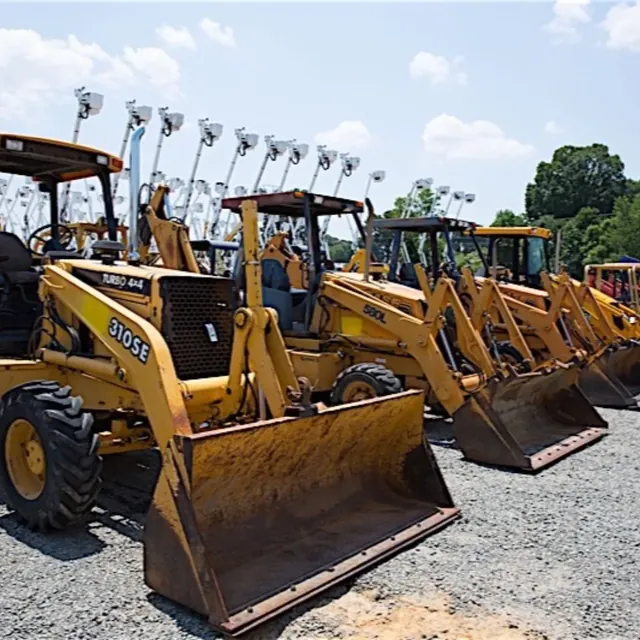
Equipment value is not business value
People searching for what their construction company is worth are usually asking two questions at once. A machinery and equipment appraisal answers the first: what the iron, the trucks, the trailers, the attachments and the shop are worth, as tangible assets, on a stated date and premise. It does not value the backlog, the bonding capacity, the crews, the customer relationships or the name on the door. Those belong to a business valuation, which is a different discipline with different standards.
The M&E number is usually the foundation of the business number, and it is the part a lender, a buyer's counsel or a court tests hardest. If you are heading toward a sale or a partner buyout, see appraisals for mergers and acquisitions for how the equipment piece fits the transaction.
Build the value from the units
A fleet appraisal is not a percentage applied to a depreciation schedule. Every unit goes on the schedule with make, model, year, serial number, meter hours and condition, photographed and valued individually. The construction auction market is deep and public, so most units can be anchored to recent sales of the same model in the same hour band and adjusted from there.
- Meter hours and undercarriage: the primary drivers on tracked machines, read against typical hours for the age. Tracks, tires and ground-engaging tools are visible money to a buyer.
- Attachments: buckets, thumbs, couplers, breakers, forks and specialty tools are valued in their own right, not absorbed into the carrier.
- Emissions tier: engine tier can limit where a machine may be operated or resold, and the market prices that in.
- Titled rolling stock: on-road trucks, tractors and trailers carry titles and a different resale channel than yellow iron. They belong on the schedule but they do not behave like it.
- Small tools and shop: compaction, saws, generators, welders, lifting gear and the shop itself are routinely left off owner-prepared lists and are routinely worth real money.
Then reconcile it as a fleet
Once the units are valued, the fleet has to be looked at as a fleet, because selling forty machines is not forty separate transactions. Three things move the reconciled figure.
The first is absorption. Putting a large number of similar machines into the same regional market over a short window depresses what each one brings. A fleet heavy in one size class of one machine type is more exposed to this than a mixed fleet.
The second is location and transport. Heavy equipment is mobile, which widens the buyer pool but adds cost to every sale. Where the iron sits relative to where the buyers are is a real adjustment under a liquidation premise, and so is de-mobilization.
The third is the marketing period the premise assumes. Orderly liquidation value assumes a controlled marketing period; forced liquidation value assumes a compressed one. The same fleet produces different numbers under each.
Which premise applies
Equipment loans, asset-based lending and recovery work usually call for orderly or net orderly liquidation value. A sale of the business, a partner buy-in or a fleet acquisition usually calls for fair market value. Estate, divorce and partnership disputes use fair market value as of a specific date, often a date in the past. Insurance work is a different question again and usually turns on replacement cost new rather than market value.
The purpose of the assignment sets the premise. Using the wrong one is a common reason a number gets challenged, so we confirm the purpose and the intended user before any inspection. We do not quote a value before we have seen the equipment.
What you should expect to hand over
The assignment moves fastest when you can produce an asset list with serial numbers, current meter readings, and any titles for the rolling stock. Do not spend time cleaning up the list first. Finding what is missing from it is part of the work, and the gaps matter: an attachment nobody listed, a machine that was traded two years ago and never removed, a unit already pledged somewhere else. Construction and heavy equipment sits inside our general machinery and equipment specialty. See general machinery & equipment.
See our construction and heavy equipment appraisal specialty →
Common questions
Answers, up front.
Is my equipment value the same as my company's value?
No. A machinery and equipment appraisal values the tangible assets: the machines, rolling stock, attachments and shop. It does not value backlog, bonding capacity, crews, contracts or goodwill, which belong to a business valuation. The M&E figure is usually the foundation the business number is built on, and it is the part that gets tested hardest.
Why is a fleet worth less than the units added up?
Because selling many similar machines into the same market over a short window depresses what each brings, and because transport, de-mobilization and the marketing period the premise assumes all cost something. Units are valued individually, then the fleet is reconciled for absorption, location and premise.
Do you include attachments, trucks and small tools?
Yes. Attachments are valued in their own right rather than absorbed into the carrier, titled rolling stock is scheduled separately because it resells through a different channel, and shop equipment and small tools are included. Those last two are the categories most often missing from an owner-prepared list.
What should I have ready before the inspection?
An asset list with serial numbers, current meter readings, and titles for any on-road units. Do not clean it up first. Finding what is missing is part of the work, and the gaps usually matter.