
What is commercial fleet and rolling stock worth?
Commercial fleet and rolling stock (service trucks, vans, tractors, trailers and yard equipment) is valued under USPAP by type, age, mileage or hours, condition, spec and the active resale and auction market. Mileage and maintenance records lead on trucks.
Trailers depreciate on their own curve, and upfits such as service bodies and reefer units carry value separate from the chassis. The first step is confirming title and lease status; leased units are not the business's assets. The premise follows the purpose: a liquidation premise for a lender's collateral file, fair market value for a sale.
Lukes & Lukes is an independent appraisal firm; every opinion comes from a NEBB-certified Machinery & Equipment Appraiser (CMEA) and carries a second senior review.
By Jared Lukes · CEO & lead appraiserUpdated
Valuing a dealership, a shop or a fleet? Request an appraisal →
What counts as fleet and rolling stock in an appraisal?
Fleet and rolling stock is every truck, trailer, mounted body and piece of yard equipment the business owns and runs.
- Light and medium trucks and vans: service, delivery and work vehicles.
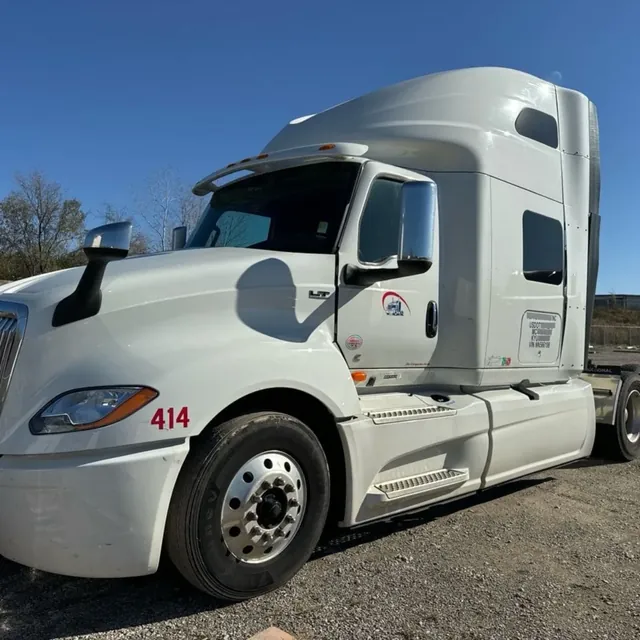
- Heavy trucks and tractors: on-highway tractors and straight trucks.
- Trailers: dry van, reefer, flatbed, dump and specialty trailers.
- Upfits and bodies: service bodies, lifts, tanks, cranes and specialized equipment mounted on a chassis.
- Yard and support: yard trucks, forklifts and ground support equipment.
Are leased trucks included in a fleet value?
No. A fleet value covers only the units the business owns; fleets are often a mix of owned, financed and leased units, and the leased ones are not the business's assets. Before anything is valued, we confirm title, lien and lease status. A schedule that includes leased vehicles overstates the collateral, and an examiner or buyer will catch it. The asset list has to match the titles, not the parking lot.
What drives the value of a truck, trailer or upfit?
On trucks, mileage and documented maintenance lead, followed by year, make, model, drivetrain spec and condition. Trailers hold value on a flatter curve and turn on type, length, suspension and floor or reefer-unit condition. Upfits matter: a well-specified service body or a current reefer unit can carry significant value separate from the chassis, while a worn or obsolete upfit adds little. Commercial vehicles and trailers trade through deep dealer and auction channels. Comparable evidence is strong, and an inflated value is easy to disprove.
Book value is a weak guide to fleet value. IRS Publication 946 classes tractor units for over-the-road use as 3-year property, so a tractor can be fully depreciated on the books while it still sells in the used market.
How does selling a whole fleet change its value?
Selling a multi-unit fleet at once carries costs a single auction comparable does not show: location, the expense of consolidating units, and condition variation from truck to truck all bear on net recovery under a liquidation premise. Rolling stock is mobile, and that widens the buyer pool. We value the fleet for how it would actually sell, not as a row of clean auction comps.
See our fleet and rolling stock appraisal specialty →
See how we build and document a defensible value →

Video · 1:01 · with transcript
Semi Truck & Fleet Appraisal: 3 Things to Know
Three things decide what a truck fleet is worth: spec and maintenance rather than the badge, the premise change that comes with selling twenty units instead of one, and VINs verified on site.
Common questions
Answers, up front.
What drives a commercial truck's value?
Mileage and documented maintenance lead, then year, make, model, drivetrain spec and condition. Trailers turn on type, length, suspension and floor or reefer condition. Upfits and specialized bodies are valued separately. Deep auction and dealer markets make comparable evidence strong.
Do you appraise leased vehicles?
Leased units are not the business's assets, so they do not belong in an appraisal of the fleet. We confirm title, lien and lease status first, and value only what the business owns. Including leased vehicles overstates the fleet and a reviewer will catch it.
Which value premise is used?
Lending, asset-based lending and recovery usually use orderly or net orderly liquidation value; a sale uses fair market value; insurance uses replacement cost; estate matters use fair market value as of a date. For fleets we also weigh location and consolidation cost.