
How to value medical equipment in a hospital
Department by department, not building by building. A hospital is a stack of separate equipment markets sharing one address, and each one prices differently: imaging carries the single largest tickets, the surgical suite splits between installed and movable assets, sterile processing is built into the walls, and the long tail of beds, pumps and monitors is high in count and low in unit value.
Lukes & Lukes is an independent machinery and equipment appraisal firm, and this is how we build a healthcare asset appraisal that holds up.
By Jared Lukes · CEO & lead appraiserUpdated
Valuing equipment in a practice or a facility? Request an appraisal →
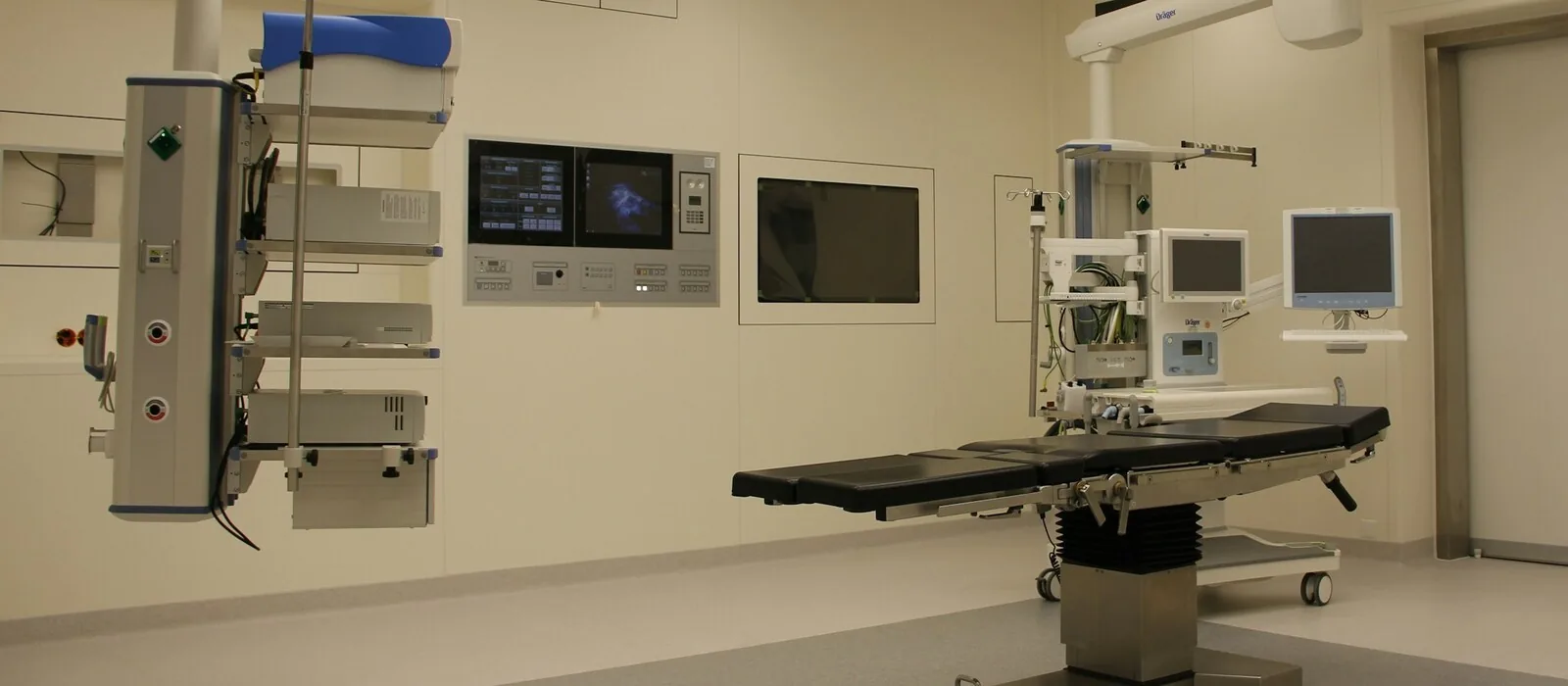
How do you value medical equipment?
Inventory it, test ownership, then value each asset class on its own market using the cost, sales comparison and income approaches, under a stated premise of value. In a hospital that means department by department, because imaging, the surgical suite, sterile processing, the lab and the long tail of beds and pumps each trade on different evidence.
A three year old CT scanner has a deep national resale market. The lead-lined room around it, the chiller that cools it and the shielded cabling stay with the building. A hundred infusion pumps two floors up are worth a fraction of the CT per unit and sell in an afternoon. The appraisal prices each class separately and states what the total assumes.
| Asset type | What drives value | Typical buyer channel |
|---|---|---|
| Diagnostic imaging (MRI, CT, X-ray) | Platform generation, tube and coil condition, software that conveys, OEM support | Imaging refurbishers and dealers |
| Movable surgical (tables, anesthesia, towers, scopes) | Model generation, service record, completeness | Used medical dealers, refurbishers, auction |
| Installed surgical (booms, lights, integration) | Cost to remove and re-site | Usually stays in place; salvage on removal |
| Sterile processing (sterilizers, washers) | Installation, chamber condition, removal cost | Dealers; often valued in place |
| Laboratory analyzers | Ownership first, then platform, test menu, support | Lab equipment resellers, auction |
| Beds, pumps, monitors | Model, count, fleet uniformity, software and batteries | Used medical dealers, online auction |
How does the cost approach value medical equipment?
It starts from replacement cost new, the price of a current asset of equal utility, and deducts physical deterioration, functional obsolescence and economic obsolescence. It carries the most weight for installed and specialized systems, where few true comparable sales exist.
Replacement cost comes from current OEM and distributor pricing for the equivalent model, not from the original invoice. A fixed asset register carries historical cost, which is an accounting figure.
How does the sales comparison approach value medical equipment?
It compares the subject to recent sales of the same make, model and configuration, adjusted for age, condition and what is included. For imaging, surgical movables and the long tail, the secondary market is deep enough that this approach usually leads.
Evidence comes from refurbishers, used medical dealers and auction results. Asking prices and sold prices are recorded separately, and a dealer's refurbished price is adjusted back to the as-is condition of the subject.
When is the income approach used for medical equipment?
Rarely on its own. It applies when the equipment's earnings can be isolated, such as a freestanding imaging center or a leased modality with a known revenue stream.
In a hospital, revenue belongs to the whole enterprise. Attributing it to one scanner is a business valuation question, so the income approach is usually considered and set aside for individual assets.
How is a hospital's equipment inventory built?
By walking it and reconciling what is on the floor against the fixed asset register. The register is an accounting record built for depreciation, and it drifts: assets retired on paper still run in a department, and replaced assets keep old tags.
We record make, model, serial, age, condition and whether each asset is installed or movable, department by department. The reconciliation routinely surfaces assets the client did not know it still owned, along with assets on the books that no longer exist.
Much of the lab and infusion equipment on the floor is not owned. Analyzers in particular are often placed by the manufacturer under a reagent agreement, where the hospital pays for consumables and the instrument stays with the vendor. Ownership is verified before anything is valued.
Which hospital assets carry the most value?
Imaging, in most general hospitals. The top of the equipment schedule is short and imaging equipment sits at the head of it.
- Diagnostic imaging: MRI, CT, interventional and nuclear medicine systems are the largest single line items. See what a used MRI or CT machine is worth.
- The surgical suite: tables, anesthesia machines, towers and scopes are movable and hold market value. Ceiling booms, surgical lights and integration systems are installed. See how surgical equipment is valued.
- Sterile processing: pass-through steam sterilizers and washer disinfectors are plumbed, steam-fed and set into a barrier wall, and lose most of their value on removal. See sterile processing equipment appraisal.
- Laboratory and diagnostics: valued only after ownership is confirmed, then on platform, throughput and vendor support. See how to value used laboratory equipment.
- The long tail: beds, pumps, ventilators, telemetry and monitors. Low value per unit, high count, and an active secondary market. See how patient monitoring equipment is valued.
Why do installed value and liquidation value diverge in a hospital?
Because much of what a hospital paid for was the installation. An MRI needs a shielded room, structural work, a cooling system, rigging and commissioning, and every one of those costs is spent in place.
Valued as part of a going concern, that work counts. Valued for removal, most of it falls away, and the appraisal nets out de-installation, rigging and transport. Fair Market Value installed, Fair Market Value removed, Orderly Liquidation Value and Forced Liquidation Value can produce very different totals from the same schedule.
Our reports state the premise of value on the face of the report and what it assumes. The definitions are in FMV, OLV, FLV and NOLV explained.
Who orders a hospital equipment appraisal?
Lenders first, then buyers, insurers, auditors and counsel. A bank or SBA lender underwriting against a hospital, surgery center or health system's equipment needs an independent, third-party opinion of value for the collateral file.
A hospital acquisition or service-line purchase needs the equipment component of purchase price allocation. Insurance schedules need a supportable replacement cost basis. Closures and consolidations need orderly and forced liquidation values. Litigation and audit work needs a report that survives cross-examination. Our healthcare, medical and dental equipment appraisal practice covers all of it, and every report is prepared USPAP-compliant by a NEBB-certified Machinery & Equipment Appraiser (CMEA), with senior review before it leaves the office.
We appraise hospital and health system equipment across the country, including the New York metro area.
Common questions
Answers, up front.
Can a hospital equipment appraisal be done from the fixed asset register alone?
It can be done that way, but it should not be relied on for lending or litigation. A fixed asset register is an accounting record built for depreciation, and it drifts from the floor over time through retired assets still in service, replaced assets carrying old tags, and vendor-placed equipment recorded as owned. A defensible healthcare asset appraisal reconciles the register against a physical inspection and reports what is actually there.
Does a hospital appraisal cover the building and fixtures too?
No. A machinery and equipment appraisal covers the equipment. Items that are structural or building services, such as an MRI shielded room, medical gas piping or a central chiller, are generally real property and belong in a real estate appraisal. We identify the boundary explicitly in the report so nothing is double counted between the two and nothing is missed between them.
How is imaging equipment valued differently from the rest of a hospital?
Imaging is valued on remaining manufacturer support as much as on age or condition. A system whose platform is still supported for parts and service holds real value on a deep national market. A system past its support window trades at a steep discount no matter how well it images, because the buyer is really purchasing a service contract. That support question moves imaging values more than physical wear does.
Will a lender accept this appraisal for a hospital or surgery center loan?
Yes, provided it is independent and USPAP-compliant. Lenders and SBA underwriters need a third-party opinion of value from an appraiser with no interest in the transaction who is qualified for the asset class. Ours is prepared by a NEBB-certified Machinery & Equipment Appraiser (CMEA) and built to withstand lender, SBA, IRS, audit and legal review.