
How to value used laboratory equipment
Laboratory and diagnostics equipment is valued under USPAP by platform, age, throughput, condition and the resale market for each class: chemistry and immunoassay analyzers, hematology, molecular and PCR systems, mass spectrometry, centrifuges and point-of-care devices. The first question is ownership: many lab analyzers are placed under reagent-rental or cost-per-test agreements and are not owned by the lab, so they cannot be appraised as its assets. Once ownership is confirmed, the premise follows the purpose.
Lukes & Lukes is an independent Machinery & Equipment (M&E) appraisal firm; every report is prepared by a NEBB-certified Machinery & Equipment Appraiser (CMEA).
By Jared Lukes · CEO & lead appraiserUpdated
Valuing equipment in a practice or a facility? Request an appraisal →
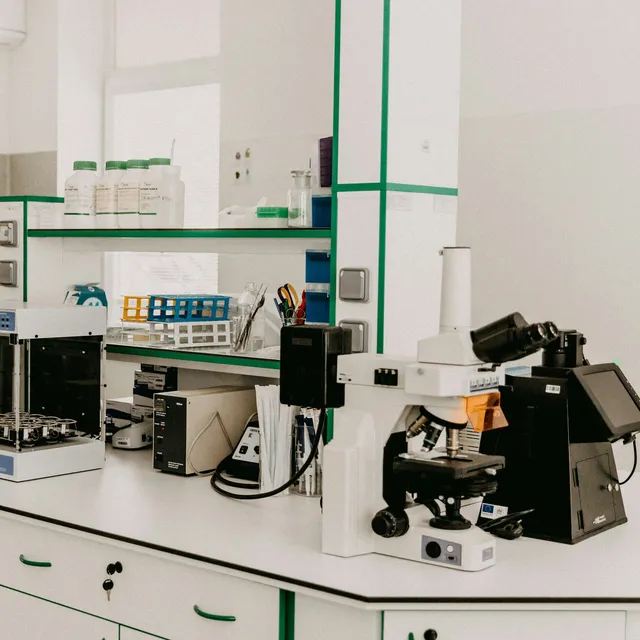
How do you value used laboratory equipment?
Confirm who owns each instrument, then value it on platform generation, manufacturer support, throughput, condition and the secondary market for that class. The premise of value follows the purpose: fair market value for a sale, a liquidation premise for a loan or wind-down.
| Asset type | What drives value | Typical buyer channel |
|---|---|---|
| Chemistry and immunoassay analyzers | Ownership, platform generation, test menu, OEM support | Lab equipment resellers, OEM trade-in |
| Hematology and coagulation | Platform generation, service status, reagent availability | Lab equipment resellers |
| Molecular, PCR and sequencing | Platform generation, assay support, software that conveys | Resellers, surplus auction |
| Mass spectrometry and chromatography | Configuration, detector condition, service history | Specialist instrument dealers |
| General lab (centrifuges, freezers, microscopes) | Condition, brand, completeness | Surplus auction, used lab dealers |
Does the lab own the analyzer?
Often not. Many analyzers are placed by the manufacturer under reagent-rental or cost-per-test agreements, where the lab pays through consumables and the instrument stays with the vendor.
Vendor-owned instruments are not the lab's assets and are left out of the appraisal. We confirm title and the terms of any placement before anything goes in the report. It is the most common error in lab valuations and the first thing a careful reviewer checks.
What laboratory equipment can be appraised?
Every owned instrument in a clinical, research or industrial lab. Our laboratory and diagnostics equipment appraisal work covers:
- Clinical chemistry and immunoassay: standalone and integrated analyzers and lines.
- Hematology and coagulation: analyzers and slide makers.
- Molecular and PCR: extraction, amplification and sequencing platforms.
- Mass spectrometry and chromatography: LC-MS/MS, GC and HPLC systems.
- General lab: centrifuges, incubators, freezers, microscopes and point-of-care devices.
What drives the value of used lab equipment?
Platform generation and whether the manufacturer still supports the system lead. Throughput, configuration and the instrument's place in a current testing menu follow.
A platform tied to discontinued assays loses value quickly. A documented service and calibration history supports value; orphaned or end-of-life instruments are discounted.
Where does comparable evidence for used lab equipment come from?
From lab equipment resellers, surplus and liquidation auctions, and specialist instrument dealers. The market is real but uneven: deep for common analyzers and general lab equipment, thin for specialized systems.
Reseller prices usually reflect refurbished, tested and warrantied units, so they are adjusted back to the as-is condition of the subject. Asking prices and sold prices are recorded separately.
Which value premise applies to lab equipment?
The purpose decides it. Fair market value for a sale or lab transaction, a liquidation premise for a loan or wind-down, and fair market value as of a date for estate or partnership matters. Lab work sits inside our healthcare and medical equipment specialty.
We value laboratory and analytical equipment in life-science clusters across the country, including the San Francisco Bay biotech corridor, the research and pharma concentration in San Diego, and the New York metro health-science campus network.
See our laboratory and diagnostics equipment appraisal specialty →
Common questions
Answers, up front.
Why does ownership matter so much for lab analyzers?
Because many analyzers are placed under reagent-rental or cost-per-test agreements and belong to the vendor, not the lab. Those instruments are not the lab's assets and do not belong in an appraisal of them. Confirming title first keeps the value honest, and it is the first thing a reviewer checks.
What drives a lab analyzer's value?
Platform generation and manufacturer support, throughput and configuration, whether it serves a current testing menu, and service and calibration status. A platform tied to discontinued assays or out of support is discounted. Comparable evidence comes from the secondary market for that category.
Which value premise is used?
It depends on purpose: fair market value for a sale, a liquidation premise (OLV or NOLV) for a loan or wind-down, and fair market value as of a date for estate or partnership matters. We confirm the premise after confirming ownership.