
What are AGVs and warehouse automation worth?
Automated guided vehicles, autonomous mobile robots, automated storage and retrieval systems and robotic picking cells carry value in the software, the integration and the fleet, not only in the hardware on the floor. A system configured to one building and one warehouse management system is worth substantially less once it is uninstalled, so the premise and the removal assumption move these values more than they move a forklift's. Lukes & Lukes is an independent appraisal firm; a NEBB-certified Machinery & Equipment Appraiser (CMEA) prepares every report, and a second senior appraiser reviews it.
By Jared Lukes · CEO & lead appraiser
Financing or buying an automated facility? Request an appraisal →
What counts as warehouse automation
- Automated guided vehicles (AGVs): tuggers, forked units and unit-load carriers that follow a fixed guide path, wire, magnetic tape or laser targets.
- Autonomous mobile robots (AMRs): free-navigating units that map the building and route themselves, without fixed infrastructure.
- Automated storage and retrieval (ASRS): cranes, shuttles, vertical lift modules and carousels, usually built into the rack structure.
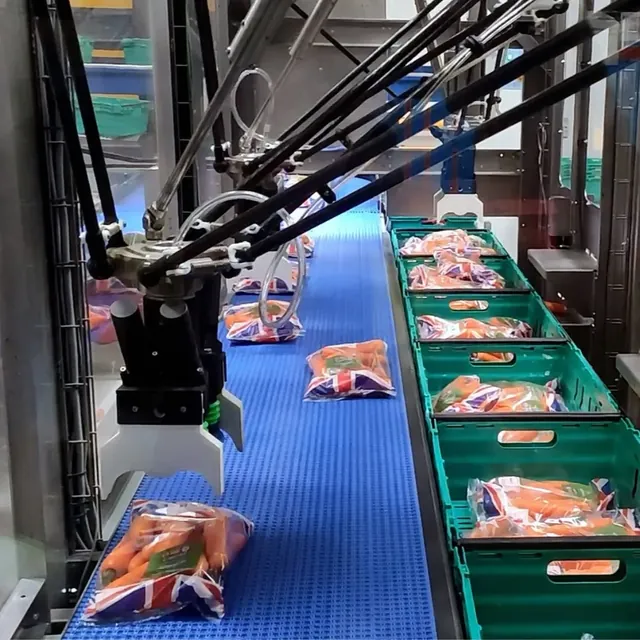
- Goods-to-person and robotic picking: pick cells, piece-picking arms, put walls and the vision systems that run them.
- Sortation and conveyance: high-rate sorters, shoe and cross-belt units, merges and the conveyor that ties the system together.
- The control layer: the fleet manager, warehouse control software and the integration to the warehouse management system. Hardware without it is a set of vehicles and racks.
The distinction matters because a facility rarely buys one of these. It buys a system, and the system was engineered to a building, a rate and a product profile.
Why the value behaves differently from ordinary material handling
Racking, forklifts and standard conveyor have deep, liquid resale markets and move readily between buildings. Automation does not behave that way. A large share of the original spend went to engineering, integration, commissioning and software licensing, and that spend does not travel with the hardware when the system is taken out.
The practical consequence shows up in the spread between premises. On the same system, fair market value in place and in use can sit far above an orderly liquidation value, because in place the buyer acquires a commissioned, running system, and removed they acquire crates of components that need an integrator to become a system again.
What moves the value
- Whether the system conveys with the building. A running system sold with the facility, to a buyer who wants that throughput, is the strongest case there is.
- Controls and software transferability. Licenses that transfer, current supported versions and documented integration protect value. An orphaned control generation or a license tied to the original owner does not.
- Vendor support and parts. Systems from vendors still in business, still supporting that generation, hold value. An unsupported platform narrows the buyer pool to operators already running it.
- Battery and drive condition on mobile fleets. On AGVs and AMRs the battery packs are a consumable with a real replacement cost, and fleet age is read pack by pack.
- Fleet size and homogeneity. A uniform fleet with spares is worth more per unit than the same count in mixed generations.
- Building specificity. Rack-supported ASRS engineered to one clear height and column grid is the hardest case to redeploy. Free-navigating AMRs are the easiest.
- Removal, rigging and reinstallation cost. Substantial on ASRS and sortation, which is what separates orderly liquidation value from its net figure.
How the schedule is built
Automation is inventoried at the component level and then reconciled as a system. Each vehicle, crane, shuttle, sorter section and control cabinet is scheduled with make, model, year, serial number and condition. The software, licenses and integration are identified separately, because their treatment depends entirely on the premise and on whether they transfer.
The report then says explicitly what the value assumes: that the system stays and runs, or that it comes out. Those two assumptions produce different totals from the same inventory, and a report that does not state which one it used cannot be relied on by a lender, a buyer or a court.
Who orders these
- Lenders financing an automated distribution center, who need to know what the collateral realizes if the operator fails.
- Buyers and sellers in an acquisition where automation is a large share of the tangible assets.
- Lessors and lessees settling an end-of-term purchase option or a return condition under a master lease.
- Insurers and insureds establishing replacement cost or amount of loss on a damaged system.
- Operators pricing a redeployment between their own facilities.
Common questions
Answers, up front.
Is the software included in the appraised value?
It depends on the premise and on whether the licenses transfer. Valued in place and in use, the commissioned system including its transferable control software is what the buyer acquires. Valued removed, licenses that cannot transfer carry no value to a third party, and the report says so rather than leaving it implied.
Why is the removed value so much lower than the installed value?
Because engineering, integration and commissioning were a large share of the original spend and do not survive removal. A buyer of uninstalled automation has to pay an integrator to make it a system again in a different building, and they price that work into what they will bid.
Can AGVs and AMRs be redeployed to another building?
Free-navigating autonomous mobile robots redeploy most readily, since they map the new building rather than relying on installed guide paths. Fixed-path AGVs need their guidance infrastructure reinstalled. Rack-supported storage and retrieval systems are the hardest case, because they were engineered to one clear height and column grid.
Do you inspect an automated facility while it is running?
Yes, and running is the better inspection. Observing the system at rate shows throughput, fault behavior and the condition of the mobile fleet in a way a static walk cannot. We work to the site's access and safety rules and schedule around production where required.