
What is material handling equipment worth?
Material handling equipment is valued under USPAP by type, age, hours, condition and the active resale market: forklifts and lift trucks, pallet racking and shelving, and conveyors and sortation. Forklifts trade on a deep used market by class, hours and power type, but fleets are often leased rather than owned.
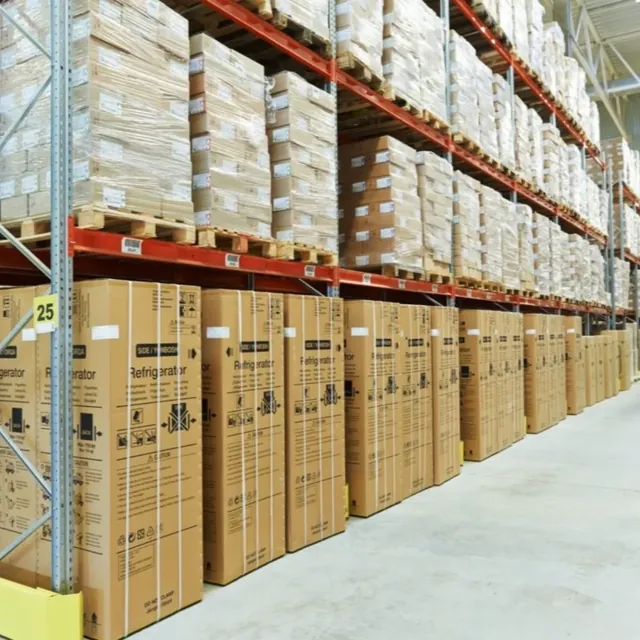
Racking value turns on the cost to dismantle and ship it, and integrated conveyor or sortation systems are productive in place yet hard to relocate, so their liquidation value can sit well below in-place cost. Lukes & Lukes is an independent machinery and equipment appraisal firm. Each report is prepared by a NEBB-certified Machinery & Equipment Appraiser (CMEA) and checked by a second principal before delivery.
By Jared Lukes · CEO & lead appraiserUpdated
Need a defensible value on equipment like this? Request an appraisal →
What we appraise
- Forklifts and lift trucks: counterbalance, reach, order pickers and pallet jacks.
- Storage: selective, drive-in and pushback pallet racking, shelving and mezzanines.
- Conveyor and sortation: belt, roller, accumulation and automated sortation.
- Automated systems: AS/RS, AGVs and automated storage and retrieval.
- Dock and yard: dock levelers, balers and yard support equipment.
Two things to settle first
Ownership. Forklift fleets are frequently leased, and leased trucks are not the business's assets, so we confirm title and lease status before valuing them. Removal cost. Racking and conveyors are installed assets; what they bring depends on tear-down, freight and reinstallation. A warehouse full of racking can look valuable until you subtract the cost to dismantle and ship it, which is why its orderly liquidation value is often a fraction of replacement cost.
What drives the value
Forklifts trade on a deep used market: class, hours, power type (electric vs LP or diesel), capacity, mast and attachments all matter, and electric is increasingly favored. Racking value is dominated by type, condition and the economics of removal, with freight a real factor for a low-value-per-pound asset. Conveyors and sortation are usually custom and integrated, so they are worth far more to a going concern than at liquidation. Automated systems (AS/RS, AGVs) are the most installation-specific and the hardest to redeploy.
Which premise applies
Lending and collateral work, SBA and wind-downs usually call for orderly liquidation value (OLV) or net orderly liquidation value (NOLV). A purchase or sale usually calls for fair market value (FMV). Estate matters use FMV as of a specific date. Material handling sits inside our general machinery and equipment specialty. See general machinery & equipment.
Common questions
Answers, up front.
What drives a forklift's value?
Class, hours, power type (electric vs LP or diesel), capacity, mast height and attachments, against a deep used market. Electric trucks are increasingly favored. We also confirm whether the truck is owned or leased, since leased units are not the business's assets.
Why is racking often worth less than expected?
Because racking is an installed, low-value-per-pound asset, and what it returns depends on the cost to dismantle, freight and reinstall it. Once removal and shipping are subtracted, orderly liquidation value is often a fraction of replacement cost.
How are conveyor and automated systems valued?
As integrated systems. They are productive in place but custom and hard to relocate, so their value to a going concern is much higher than their liquidation value. AS/RS and AGVs are the most installation-specific and hardest to redeploy.