
How is dialysis equipment valued?
By category, not by clinic. A hemodialysis machine is valued on its generation, hours and service history against an active secondary market. The reverse-osmosis water treatment plant is valued as an installed, certified system that loses most of its worth the moment it is unbolted from the building. Treatment chairs and floor equipment follow the station count. Lukes & Lukes is an independent machinery and equipment appraisal firm, and this is how we build that number.
By Jared Lukes · CEO & lead appraiser · July 27, 2026
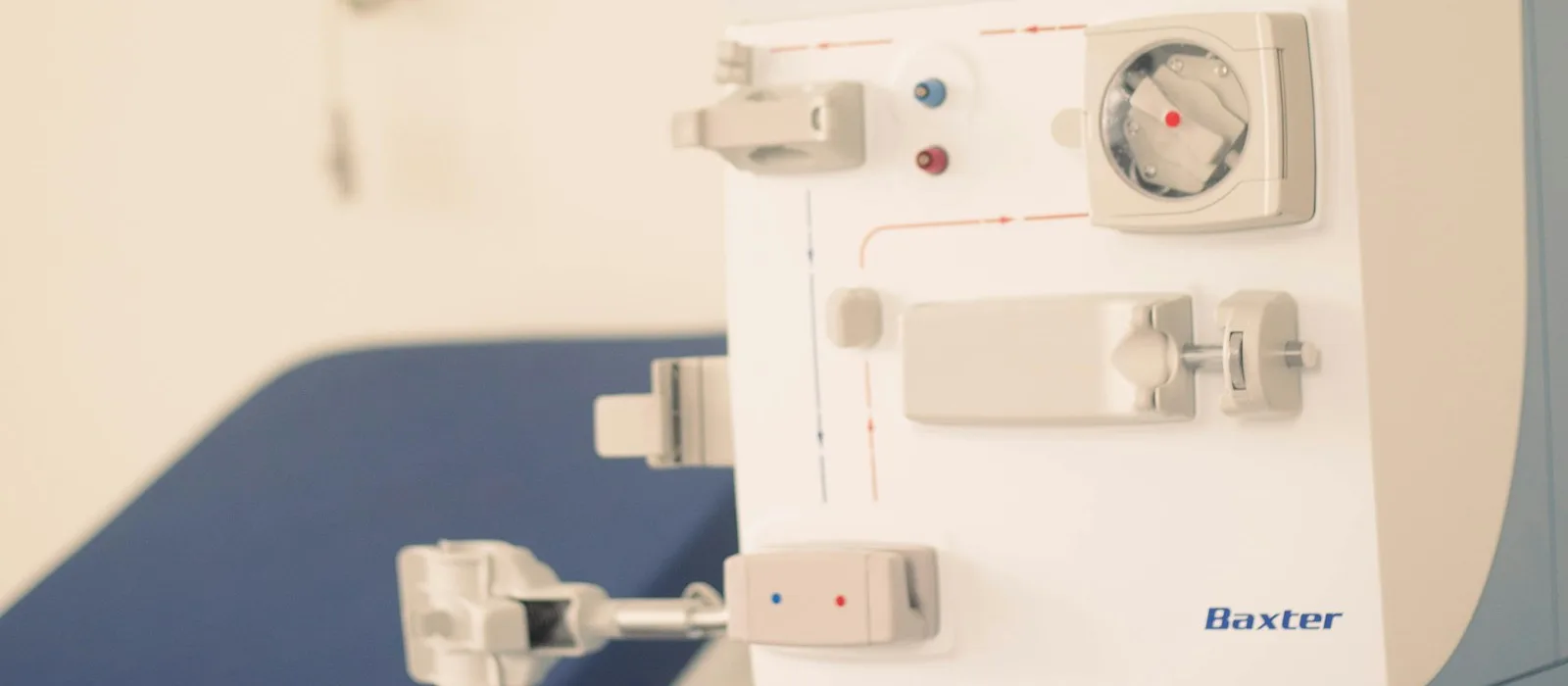
What is a dialysis clinic's equipment actually worth?
It depends which asset you mean, because a dialysis clinic is really three markets wearing one roof. The hemodialysis machines and treatment chairs are personal property that can be unbolted, moved and resold, so they carry value wherever they end up. The central water treatment system is real property in function even where it is personal property in form: built into the walls, sized to the clinic and certified for use in place. A single appraisal has to price both kinds of asset correctly, on their own terms, or the number misleads whoever relies on it.
How are hemodialysis machines valued?
By generation, machine hours, documented service history and the resale market for that specific platform. A handful of manufacturers control the service and parts ecosystem for in-center hemodialysis machines, so the question that moves the number most is not cosmetic condition, it is whether that ecosystem still supports the model. A current-generation machine with clean preventive-maintenance logs holds real value on an active secondary and export market. A machine the manufacturer has stopped servicing trades at a steep discount no matter how clean it looks, because a clinic buying used equipment is really buying a service contract, not a box.
- In-center hemodialysis machines: valued by generation, hours and service documentation.
- Home hemodialysis and peritoneal cyclers: valued on their own, smaller resale market.
- Bicarbonate mixing and dialyzer reprocessing systems: valued with the treatment floor.
- Chairs, scales and lifts: follow station count, not the water plant.
Why doesn't the water treatment system travel with the clinic?
Because it was never built to. A central reverse-osmosis plant is plumbed into the building, sized to the station count and qualified in place under the water-quality standards the clinic operates to. Remove it and most of what made it valuable, the installation, the qualification, the fit to that specific space, disappears with the plumbing. In an appraisal for financing or a clinic sale, the water plant carries meaningful value as part of the operating business. In an appraisal for liquidation, where the assets are priced as if sold out of the building, it carries very little. Portable RO units are the exception; they trade on their own equipment market like any other machine.
Is a clinic worth more sold whole or station by station?
Usually whole. A dialysis clinic sold as a running operation keeps the water plant, the build-out and the station configuration inside the number, because a buyer is paying for a functioning treatment floor, not a pile of machines. Sold off piecemeal, the hemodialysis machines and chairs keep their market value, but the plumbed-in water treatment and the build-out fall away almost entirely, since there is no clinic left to certify them into. A defensible appraisal can state both premises side by side so a lender, buyer or seller can see the spread and understand exactly what drives it.
When does a dialysis clinic need this appraisal?
Most often for financing. A bank or SBA lender underwriting a loan against a dialysis clinic's equipment wants an independent, defensible value for the collateral file, separate from any number the borrower or seller supplies. The same report structure supports a clinic acquisition or group roll-up, where a buyer needs the equipment side of purchase price allocation, and it supports a clinic closure, where the machines, chairs and any removable water treatment equipment are valued for an orderly or forced sale. Our dialysis equipment appraisal service covers all three, station by station and asset class by asset class.
Common questions
Answers, up front.
Does machine age or machine hours matter more for a hemodialysis unit?
Hours and documented service history matter more than calendar age. Two machines from the same year can carry very different values if one has clean preventive-maintenance records and the other does not, because a buyer of used dialysis equipment is underwriting the machine's remaining service life, not its birthdate.
What happens to value when a manufacturer stops supporting a model?
The value drops sharply, independent of physical condition. A small number of manufacturers control parts and service for hemodialysis machines, so once a platform loses that support, clinics stop buying it secondhand regardless of how well it runs, and the appraisal has to reflect that market reality rather than the equipment's cosmetic state.
Will a lender accept an equipment appraisal for a dialysis clinic loan?
Yes, provided it is independent and USPAP-compliant. Lenders and SBA underwriters need a third-party opinion of value with no interest in the transaction, prepared by an appraiser qualified for the asset class. Ours is prepared by a NEBB-certified Machinery & Equipment Appraiser (CMEA) and built to withstand lender, SBA, IRS, audit and legal review.