
What is a car dealership's service and shop equipment worth?
A dealership's service and shop equipment is worth what an appraiser concludes after inspecting the fixed assets (lifts, alignment racks, diagnostics, paint booths, tire and wheel machines, parts and tooling) and valuing them under USPAP, by the premise the situation requires. The number is not a sticker price or a depreciated book figure. It is a defensible market conclusion built from condition, make, model, age, and what comparable equipment actually trades for.
Lukes & Lukes is an independent machinery and equipment appraisal firm; a NEBB-certified Machinery & Equipment Appraiser (CMEA) prepares the report and a second senior appraiser reviews it.
By Jared Lukes · CEO & lead appraiserUpdated
Valuing a dealership, a shop or a fleet? Request an appraisal →
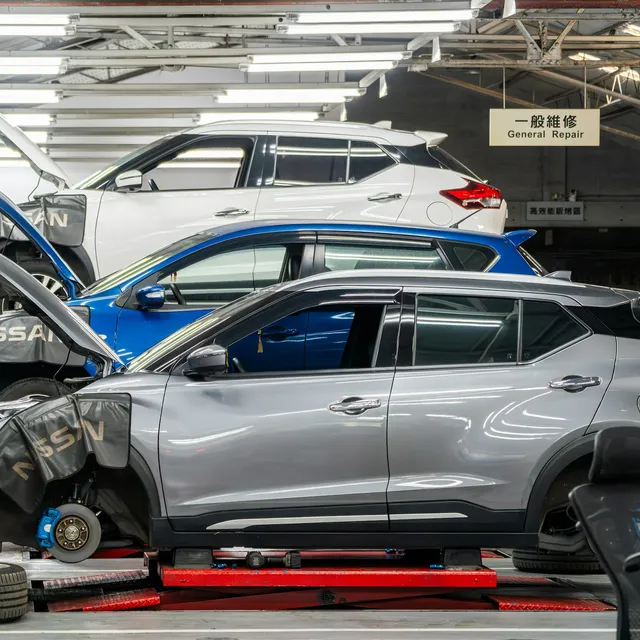
What actually makes up a dealership's equipment fleet?
A modern franchise store is a manufacturing plant for service hours. The land, building and vehicle inventory get most of the attention, but the fixed equipment behind the service drive carries real value and is often financed, sold, or contested on its own. An appraiser walks the service bays, the body shop, the alignment area and the parts department, then itemizes what is there.
- Lifts and hoists: Two-post, four-post, scissor and in-ground lifts. Capacity, age, brand and inspection history all move the number.
- Alignment racks: Drive-on alignment lifts paired with imaging alignment systems. The rack and the measurement head are valued together because they work as a unit.
- ADAS and diagnostics: Advanced driver assistance system calibration rigs, scan tools, programming devices and factory-specific diagnostic platforms. Their useful life is short because software and vehicle electronics change constantly, which the analysis reflects.
- Collision and refinish: Paint booths, prep stations, frame and measuring benches, welders and spray equipment. Paint booths are frequently the single largest line item in a body shop.
- Tire and wheel: Tire changers, road force balancers, nitrogen and inflation equipment.
- Shop support and tooling: Air compressors, fluid systems, lube reels, presses, brake lathes, benches, and the rolling tool inventory the store owns (as opposed to technician-owned boxes).
- Parts inventory: Genuine and aftermarket parts on the shelf, valued separately and on its own basis because it behaves more like stock than fixed equipment.
How is each category valued?
No category gets a blanket percentage. The appraiser identifies each asset by make, model, capacity and age, records its condition, then researches what comparable units sell for in the relevant market. Where a unit is current, well-maintained and in demand, the conclusion sits closer to replacement cost new (RCN), the cost to acquire a new equivalent. Where a unit is dated, heavily used or being sold under time pressure, the conclusion sits lower and reflects how and when it would actually change hands.
Software-dependent equipment, especially ADAS calibration and diagnostics, is treated with particular care. A rig that cannot keep pace with current vehicle platforms is worth far less than its original cost suggests, no matter how new it looks. The report documents that reasoning so a reviewer can follow it.
Why does the premise change the value?
The same lift can carry several legitimate values at once. The right one depends on the situation, and a competent appraisal states the premise plainly.
- Buy-sell of a store: When one operator buys another's service department or the whole rooftop, fair market value (FMV) usually applies, the price a willing buyer and willing seller would agree to.
- Lending and refinancing: Lenders want to know recovery, not retail. That points to orderly liquidation value (OLV) or net orderly liquidation value (NOLV), what the equipment would bring in a reasonable, advertised sale after the costs of selling it.
- SBA-backed financing: An SBA reviewer reads the collateral file line by line, and a thin appraisal keeps the credit file open. We write for the credit desk, so our report reads the way a lender needs it to.
- A distressed exit: When time is short, forced liquidation value (FLV) applies, the figure expected under compressed sale conditions.
- Estate, partnership change or litigation: These typically rest on fair market value as of a specific date, supported well enough to withstand IRS, audit and legal review.
Our reports are prepared by a NEBB-certified Machinery & Equipment Appraiser (CMEA), are USPAP-compliant, and are built to withstand lender, SBA, IRS, audit and legal review. We do not quote a value before inspection, because a value premise without inspected condition is a guess, and a guess does not survive scrutiny.
We appraise dealership equipment nationwide, including the dense dealer corridors across Charlotte and the broader Southeast.
Common questions
Answers, up front.
Does a dealership equipment appraisal include vehicle inventory?
No. New and used vehicle inventory is valued on its own basis and is normally handled separately. A machinery and equipment appraisal covers the fixed service, collision and shop assets, and can value parts inventory on a distinct basis when the engagement calls for it.
Why can't you tell me the value over the phone?
Because the number depends on inspected condition, make, model and age, and on the premise the situation requires. We do not quote a value before inspection. A figure given without seeing the equipment does not hold up under lender, SBA, IRS, audit or legal review.
Which value applies to my situation?
It depends on why the appraisal exists. A buy-sell often uses fair market value (FMV), lending typically uses orderly or net orderly liquidation value (OLV or NOLV), and a distressed exit uses forced liquidation value (FLV). We state the premise plainly in the report and explain why it fits.