
Effective age, life expectancy and remaining useful life
Effective age is how old an asset behaves, based on its condition, use, maintenance and upgrades, not the calendar years since it was built (its chronological age). Remaining useful life (RUL) is how much longer it can serve its purpose economically. Appraisers use both to measure physical depreciation: a well-maintained machine can have an effective age well below its chronological age, and a neglected one the reverse. Remaining useful life equals total economic life (life expectancy) minus effective age. For most equipment, these two judgments move the value more than the manufacture date does.
Lukes & Lukes is an independent machinery and equipment appraisal firm; a NEBB-certified Machinery & Equipment Appraiser (CMEA) makes both judgments and documents them in every USPAP-compliant report.
By Jared Lukes · CEO & lead appraiserUpdated
Need this value for a live file? Request an appraisal →
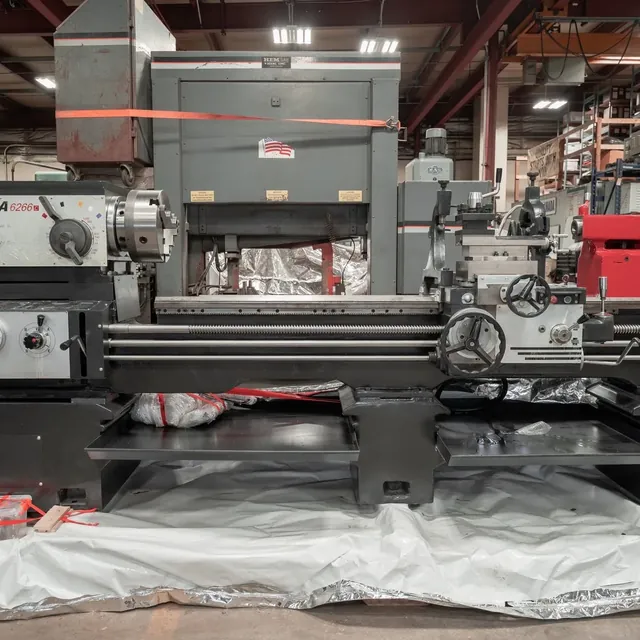
Chronological age vs effective age: what is the difference?
Chronological age is the time since the asset was manufactured. Effective age is a judgment about how old the asset behaves today. A ten-year-old machine that has been lightly used, well maintained and upgraded may perform like a five-year-old unit, giving it a lower effective age. A five-year-old machine run hard and neglected may behave like one twice its age. Buyers pay for how the asset performs now, so the appraiser values effective age, not the birth certificate.
| Term | What it measures | How it is set |
|---|---|---|
| Chronological age | Time since the asset was manufactured | The manufacture date |
| Effective age | How old this unit behaves today | Condition, use, maintenance and upgrades, judged on inspection |
| Normal useful life (total life expectancy, economic life) | How long that class of asset serves economically when new | Published service lives and observed results for the class, adjusted to the unit |
| Remaining useful life | How much longer the unit can serve its purpose economically | Normal useful life minus effective age |
What does remaining useful life mean?
Remaining useful life is the period over which the asset can still serve its intended purpose economically, before the cost to keep it running, or its obsolescence, makes replacement the sensible choice. It is not the point of total failure; it is the point at which the asset stops earning its keep. RUL and effective age are two sides of the same estimate: together they place the asset in its life.
How do you determine life expectancy based on effective age?
Remaining life expectancy is the total economic life of the asset class minus the unit's effective age. Three terms carry the calculation. Total economic life, also called normal useful life or life expectancy, is how long that class of asset serves economically when new. Effective age is how old this unit behaves today. Remaining useful life is what is left:
Remaining useful life (RUL) = total economic life minus effective age.
The same relationship runs the other way. When the inspection supports a remaining life directly, effective age is total economic life minus RUL. Physical depreciation under the age-life method is effective age divided by total economic life.
Worked example, with illustrative figures: a food processing line whose class serves about 20 years economically, built 12 years ago.
| Same 12-year-old line | Effective age | Remaining useful life | Age-life depreciation |
|---|---|---|---|
| Two shifts, documented maintenance programme | 8 years | 20 − 8 = 12 years | 8 ÷ 20 = 40% |
| Run hard, gaps in the service record | 16 years | 20 − 16 = 4 years | 16 ÷ 20 = 80% |
The chronological age is 12 in both rows. The effective age is the judgment the inspection supports, and it moves most of the value.
Total economic life is not the tax life. In IRS Publication 946 (Table B-2), asset class 20.4, Manufacture of Other Food and Kindred Products, carries a 12-year class life and a 7-year GDS recovery period. Those periods set depreciation deductions. The appraiser sets economic life from observed service lives for the class and adjusts it to the unit.
How does an appraiser estimate effective age on inspection?
An appraiser estimates effective age from five things observed or documented on site.
- Condition on inspection: wear, the state of high-wear components, and how it has been cared for.
- Use and duty cycle: hours, cycles or throughput relative to what the asset was built for.
- Maintenance and records: a documented service history supports a lower effective age; gaps cut the other way.
- Upgrades and retrofits: rebuilds, new controls or major components can reset effective age downward.
- Industry norms: typical service lives for that class of asset, adjusted to the specific unit.
How do effective age and remaining useful life change the appraised value?
Effective age sets the physical depreciation deducted in the cost approach, often estimated as effective age divided by total economic life. An error in effective age carries through the whole conclusion. It also matters to lenders and buyers directly: an asset with meaningful remaining useful life supports collateral and resale; one near the end of its life does not, regardless of what it cost new.
A credible appraisal starts from the actual asset, not a depreciation table applied to a purchase date. For how this fits the broader method, see the cost approach explained.
Common questions
Answers, up front.
What is the difference between effective age and chronological age?
Chronological age is the time since manufacture. Effective age is how old the asset behaves today, given condition, use, maintenance and upgrades. A well-kept machine can have an effective age below its chronological age, and a neglected one above it. Appraisers value effective age.
What is remaining useful life?
The period over which an asset can still serve its purpose economically, before maintenance cost or obsolescence makes replacement the better choice. It is the point at which the asset stops earning its keep, not the point of total failure.
How do these affect the appraised value?
They drive the physical depreciation deducted in the cost approach, often estimated as effective age over total expected life, and they signal to lenders and buyers how much service and resale value remain. They typically move the value more than the manufacture date.
How do you determine remaining useful life on a specific machine?
By what the machine has actually done, not by its year. An appraiser reads hours or cycles against the duty the machine was built for, the maintenance and repair record, whether the manufacturer still supports the model and parts are still available, any rebuild or major component replacement, and the environment it ran in. A three-shift machine in a foundry and a one-shift machine in a climate-controlled room can sit in very different places at the same age.
Does a rebuild or a recondition reset effective age?
It lowers it, rarely to zero. A rebuild that replaces the wear items and the control system can move a machine years back in effective age. A cosmetic recondition moves it very little. What decides the adjustment is which components were replaced, whether the work is documented, and who performed it: a factory rebuild with records supports more than a shop repaint with none.
Two identical machines from the same year. Why would an appraiser value them differently?
Because the year is the one thing they share. Hours, maintenance, tooling, control generation and the plant they ran in all separate them. Effective age is how the appraiser records that difference, and it is the reason an inspection reaches a different value than a year-and-model lookup.
Can remaining useful life run longer than the depreciation schedule?
Regularly. A depreciation schedule is an accounting and tax convention with a fixed recovery period. A machine carried at zero on the books can have years of economic life left and real market value, and that is the most common reason a book value and an appraised value are far apart.
What is a machine worth once it is past its remaining useful life but still running?
It still has value while it produces, and the premise decides how much. In place and operating it can support a modest value. Under a liquidation premise it moves toward what a used-equipment buyer or a parts and scrap market will pay. Parts availability usually decides which of those applies.